
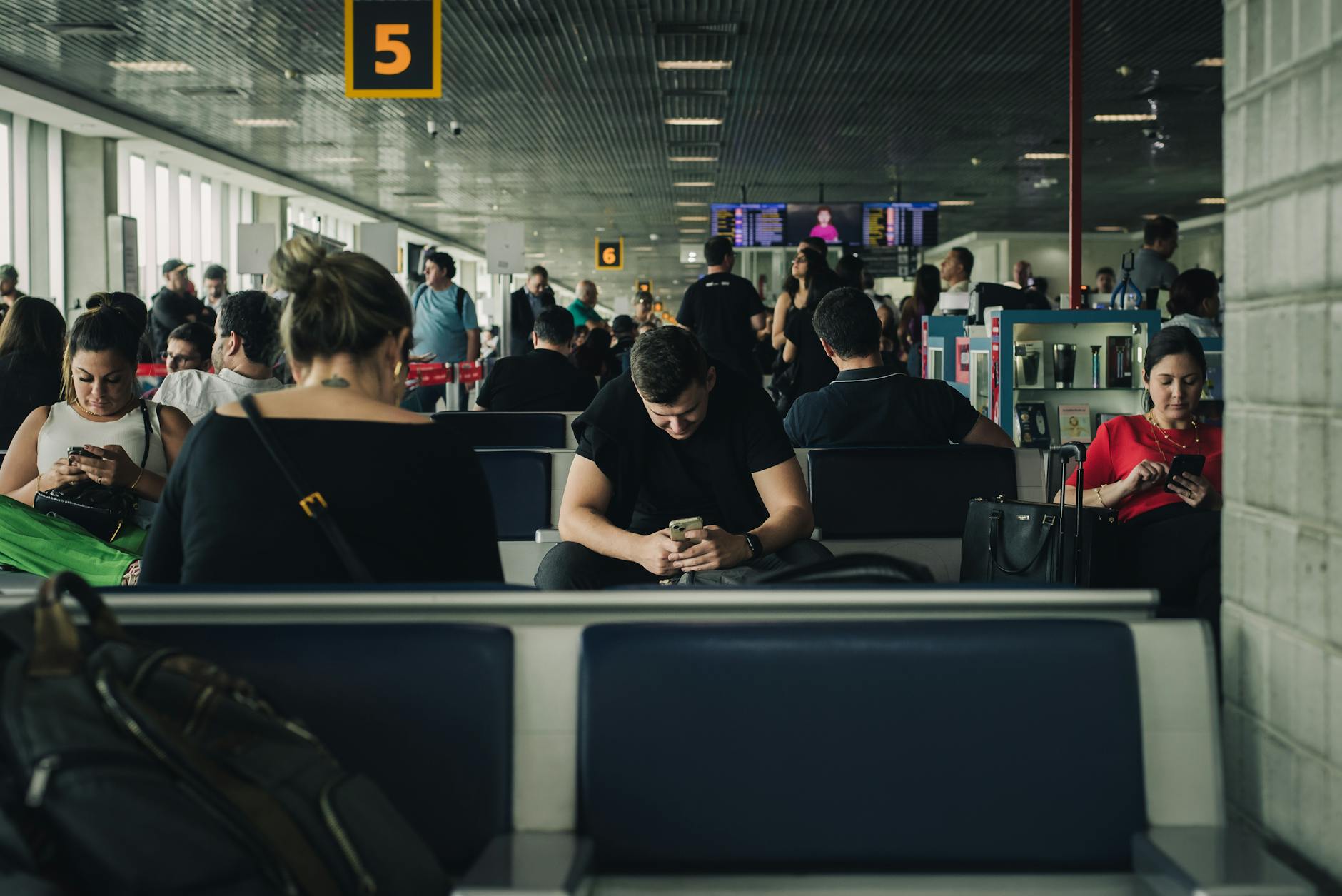
Today, at the persistent urging of my AP students, I took them outside to the courtyard to debate which poem of our Poetry “March” Madness showdown should stand as the piece that best captures the complexity of the human condition. It came down to “Perhaps the World Ends Here” by Joy Harjo (which I shared back on November 30, 2022) and “Gate A4” by Naomi Shihab Nye. The class was relatively evenly split, and no one “hated” either poem. What a delight for me to sit on the picnic bench and just listen as each side argued their points and responded to the arguments being presented. In the end, neither poem pulled away as the “clearly superior work,” but we discovered the power of shared experiences around places (kitchen tables and airports) that bring people together, whether intentionally or not, into a shared life, even if it’s only for a short period of time. While we would expect to find communion around the kitchen table, Nye captures a similar beautiful encounter with shared mamool, reminding us that despite the tensions and distrust that can so easily divide us, “This [powerful communion] can still happen anywhere. Not everything is lost.”
Gate A-4 by Naomi Shihab Nye
Wandering around the Albuquerque Airport Terminal, after learning
my flight had been delayed four hours, I heard an announcement:
"If anyone in the vicinity of Gate A-4 understands any Arabic, please
come to the gate immediately."

Well—one pauses these days. Gate A-4 was my own gate. I went there.

An older woman in full traditional Palestinian embroidered dress, just
like my grandma wore, was crumpled to the floor, wailing. "Help,"
said the flight agent. "Talk to her. What is her problem? We
told her the flight was going to be late and she did this."

I stooped to put my arm around the woman and spoke haltingly.
"Shu-dow-a, Shu-bid-uck Habibti? Stani schway, Min fadlick, Shu-bit-
se-wee?" The minute she heard any words she knew, however poorly
used, she stopped crying. She thought the flight had been cancelled
entirely. She needed to be in El Paso for major medical treatment the
next day. I said, "No, we're fine, you'll get there, just later, who is
picking you up? Let's call him."

We called her son, I spoke with him in English. I told him I would
stay with his mother till we got on the plane and ride next to
her. She talked to him. Then we called her other sons just
for the fun of it. Then we called my dad and he and she spoke for a while
in Arabic and found out of course they had ten shared friends. Then I
thought just for the heck of it why not call some Palestinian poets I know
and let them chat with her? This all took up two hours.

She was laughing a lot by then. Telling of her life, patting my knee,
answering questions. She had pulled a sack of homemade mamool
cookies—little powdered sugar crumbly mounds stuffed with dates and
nuts—from her bag—and was offering them to all the women at the gate.
To my amazement, not a single woman declined one. It was like a
sacrament. The traveler from Argentina, the mom from California, the
lovely woman from Laredo—we were all covered with the same powdered
sugar. And smiling. There is no better cookie.

And then the airline broke out free apple juice from huge coolers and two
little girls from our flight ran around serving it and they
were covered with powdered sugar, too. And I noticed my new best friend—
by now we were holding hands—had a potted plant poking out of her bag,
some medicinal thing, with green furry leaves. Such an old country tradition.
Always carry a plant. Always stay rooted to somewhere.

And I looked around that gate of late and weary ones and I thought, This
is the world I want to live in. The shared world. Not a single person in that
gate—once the crying of confusion stopped—seemed apprehensive about
any other person. They took the cookies. I wanted to hug all those other women, too.

This can still happen anywhere. Not everything is lost.
Naomi Shihab Nye, “Gate A-4” from Honeybee. Copyright © 2008 by Naomi Shihab Nye.


 the deepening ground
Leave a reply to AA1C Cancel reply